00Curveprint
What happens to
this design on a mug
The same artwork goes on a tee, a hoodie, a tote, a sticker and a mug. Four of those are flat. One is a cylinder 82 mm across, and the rectangular preview you get everywhere else says nothing about what that does to it.
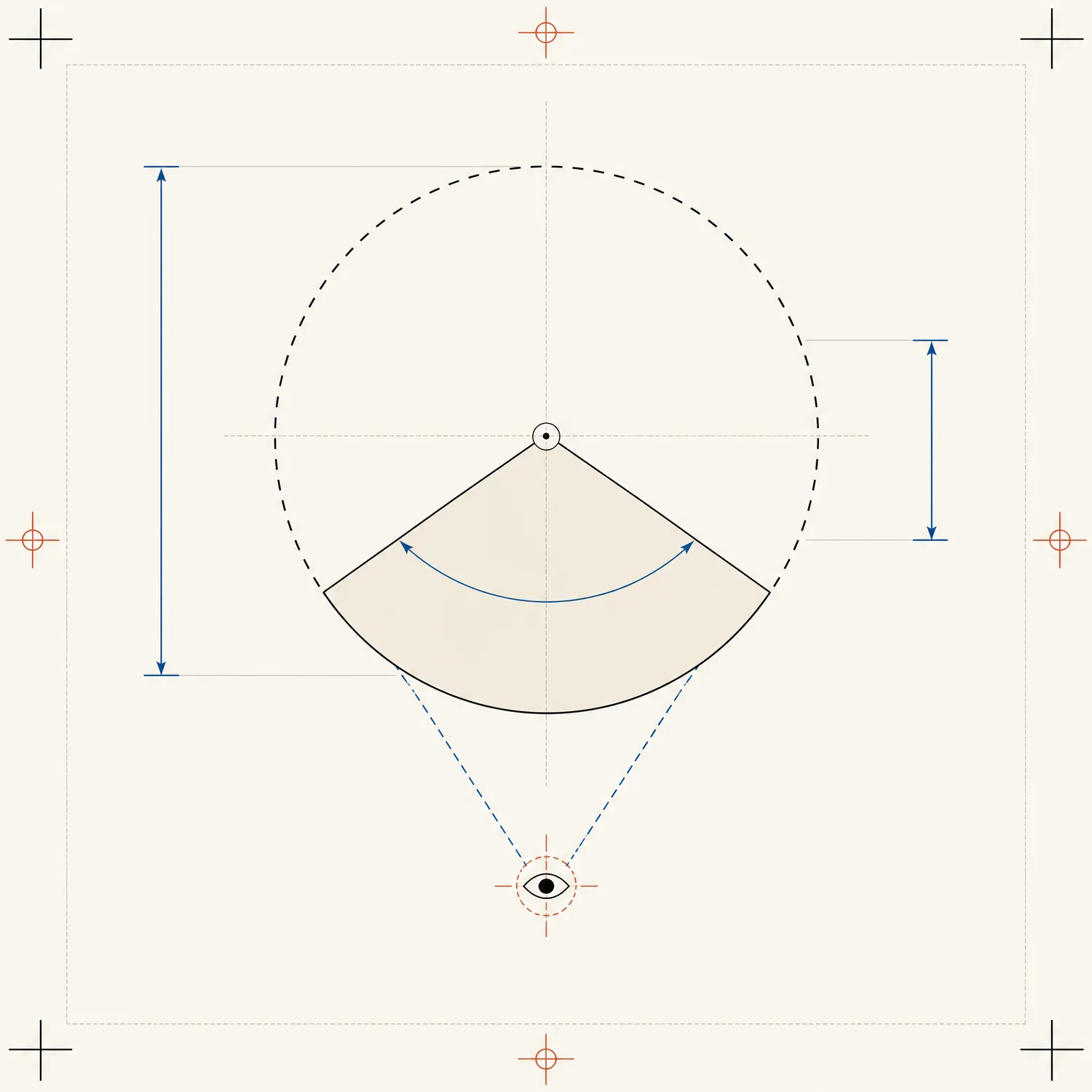
This wraps your file onto the actual cylinder in your browser, column by column, and shows you the 120 degrees a person sees at once.
82 mm
cylinder diameter, 11 oz blank
302°
of circumference the wrap covers
120°
a viewer takes in at once
50%
width remaining at the visible edge
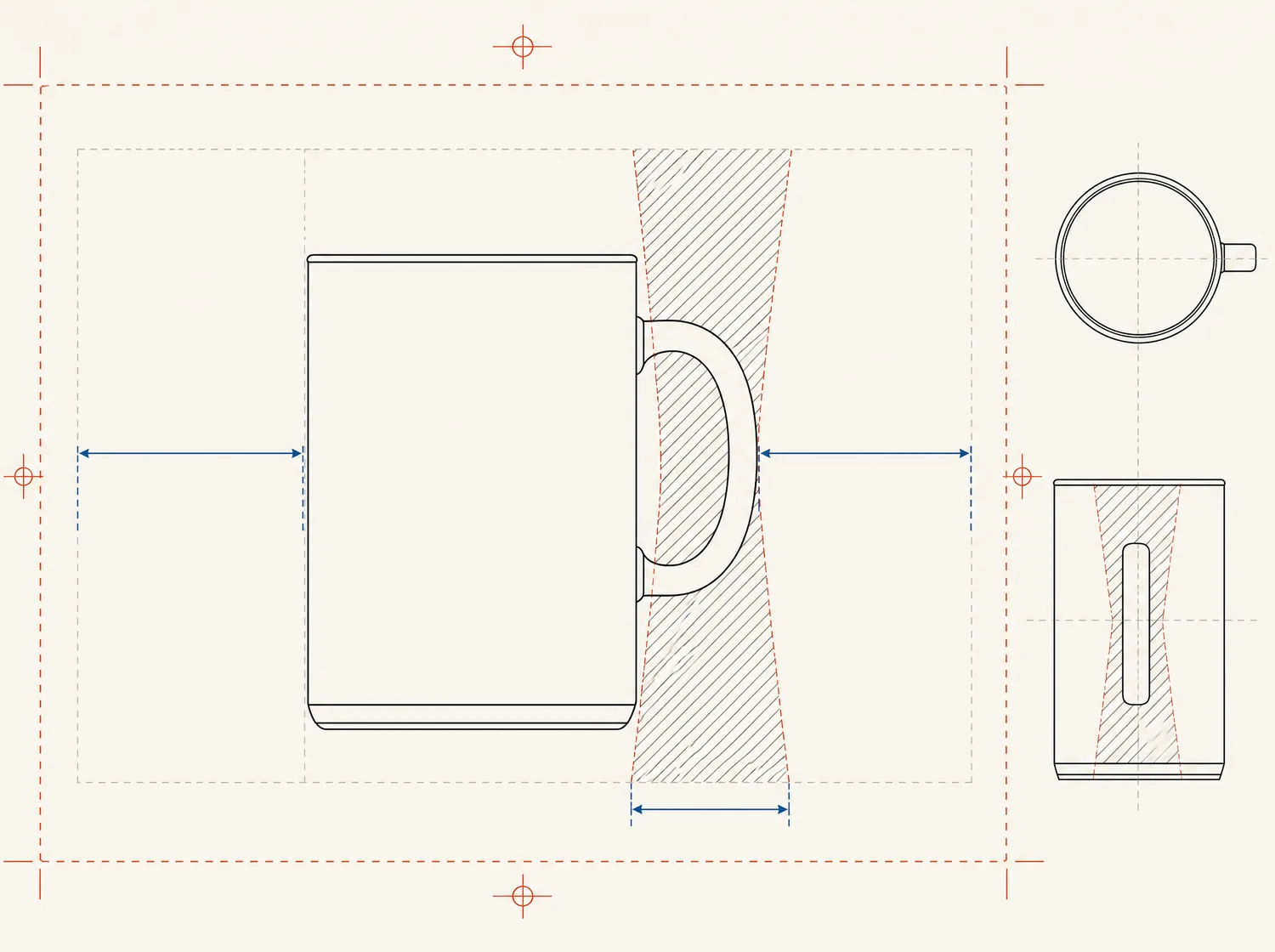
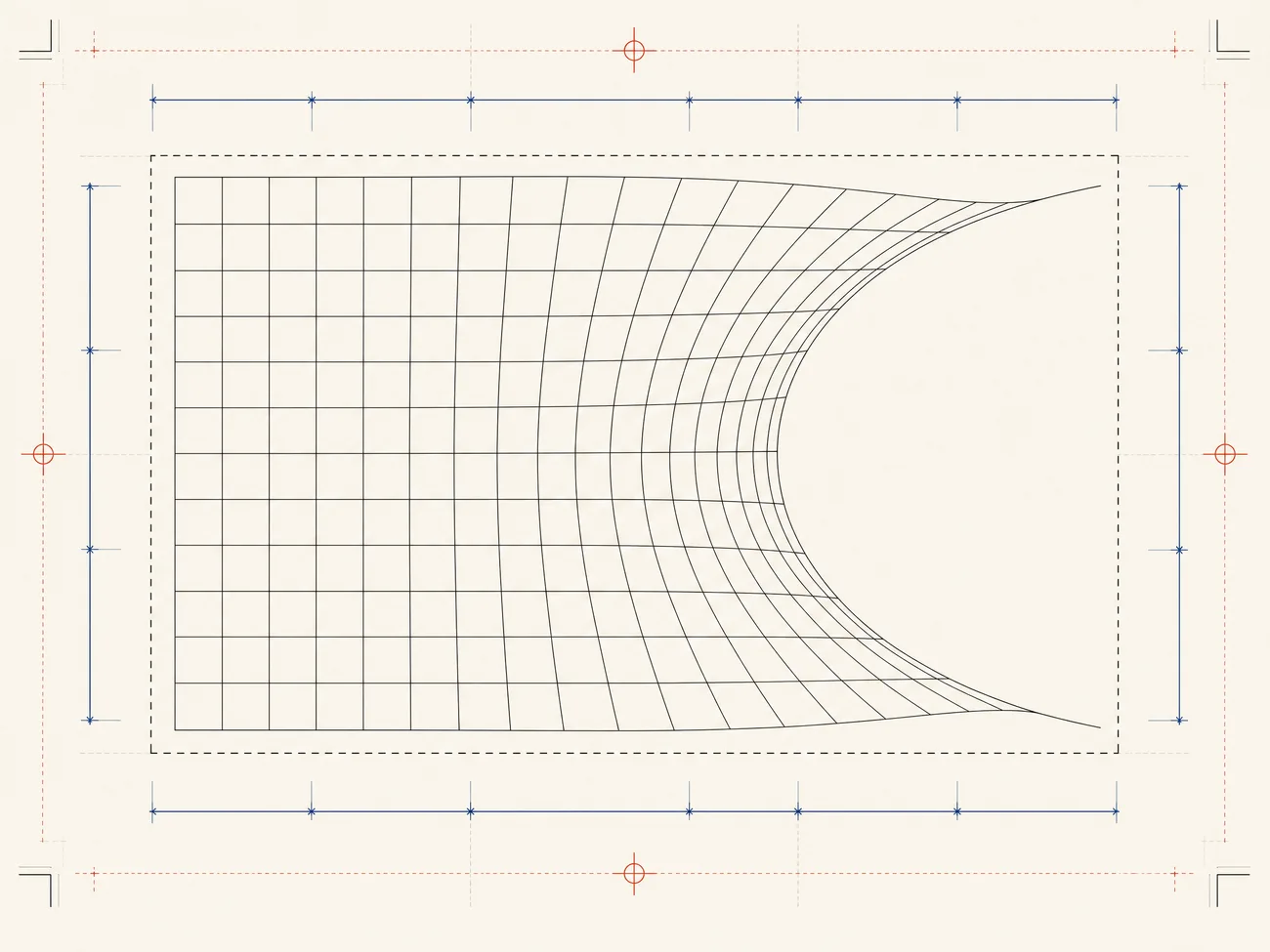
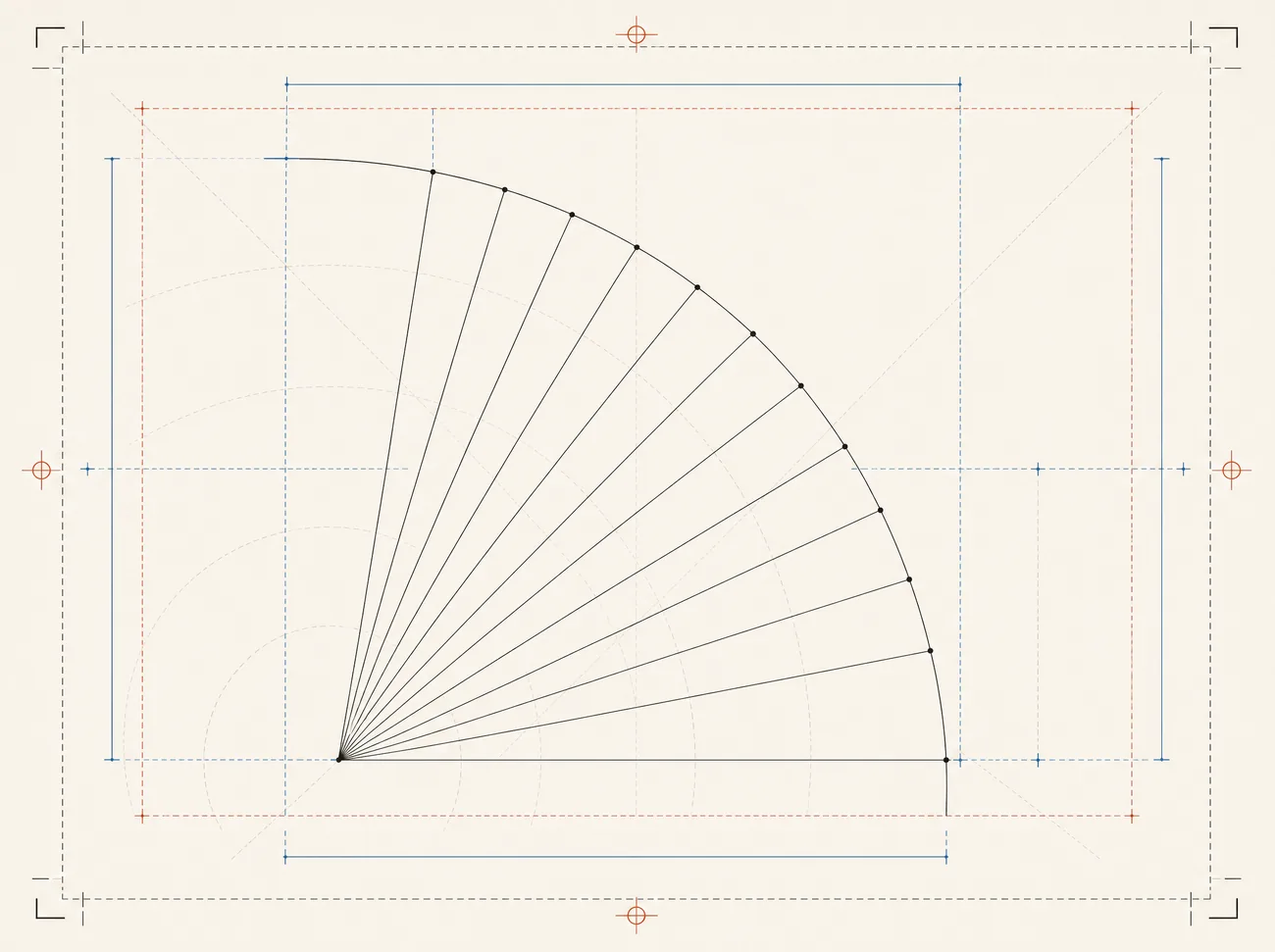
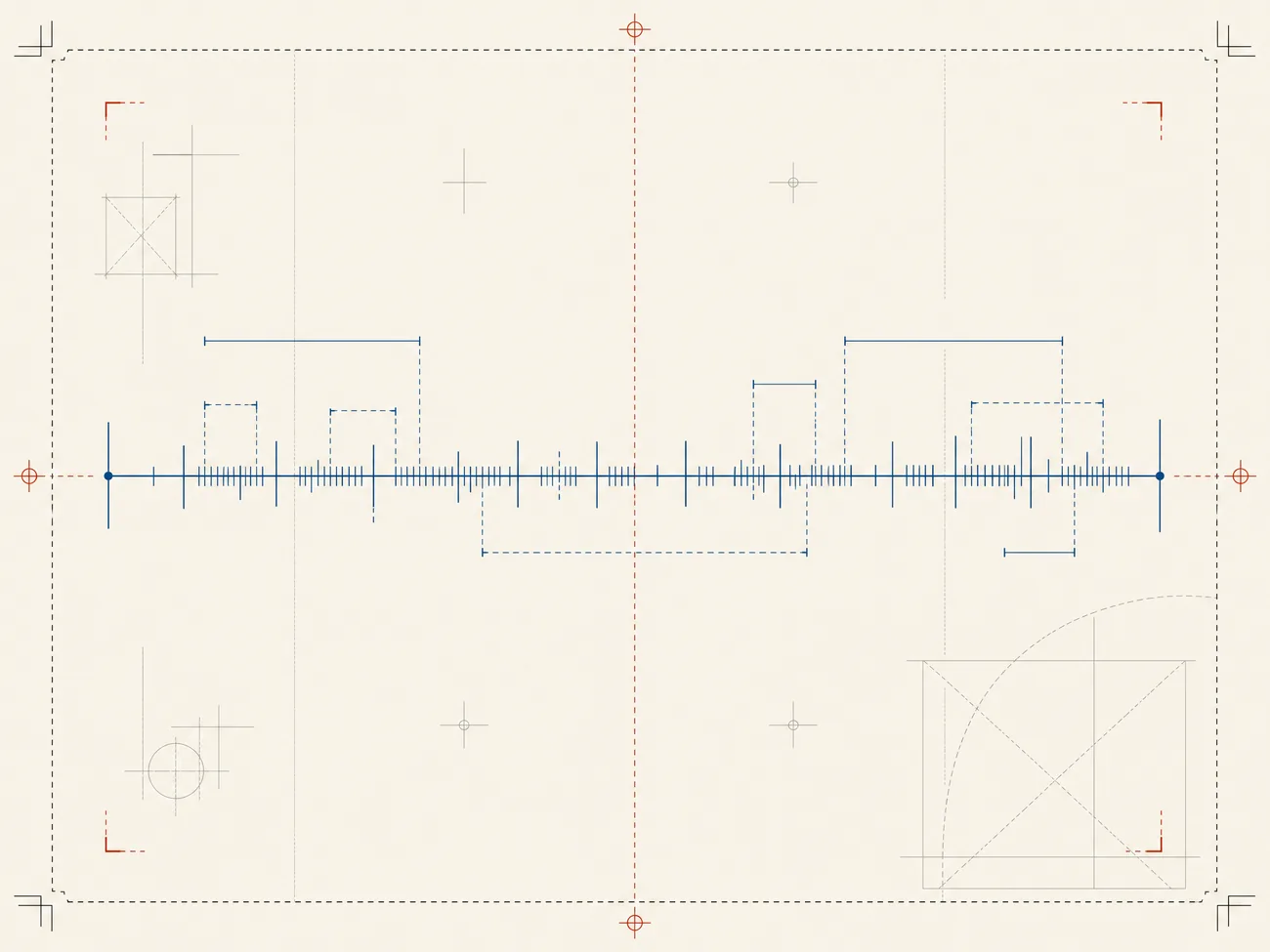
Mug, wrapped: the artwork on a 82 millimetre cylinder, showing only the 120 degrees a viewer takes in from one position. Strips at the left and right of this view are compressed to about 50 per cent of their flat width, and the compression increases continuously toward each edge until it reaches zero at the silhouette. The handle is on the right, about 151 degrees round from this face and so far outside the visible band that none of it appears here; its direction is marked at that edge instead. It takes 58 degrees of circumference, which is why the printed band stops at 302 degrees rather than going all the way round, and on the flat view that gap is marked as hatched strips just outside each end of the artwork. Everything beyond the visible band is on the far side of the cylinder.
Sample artwork
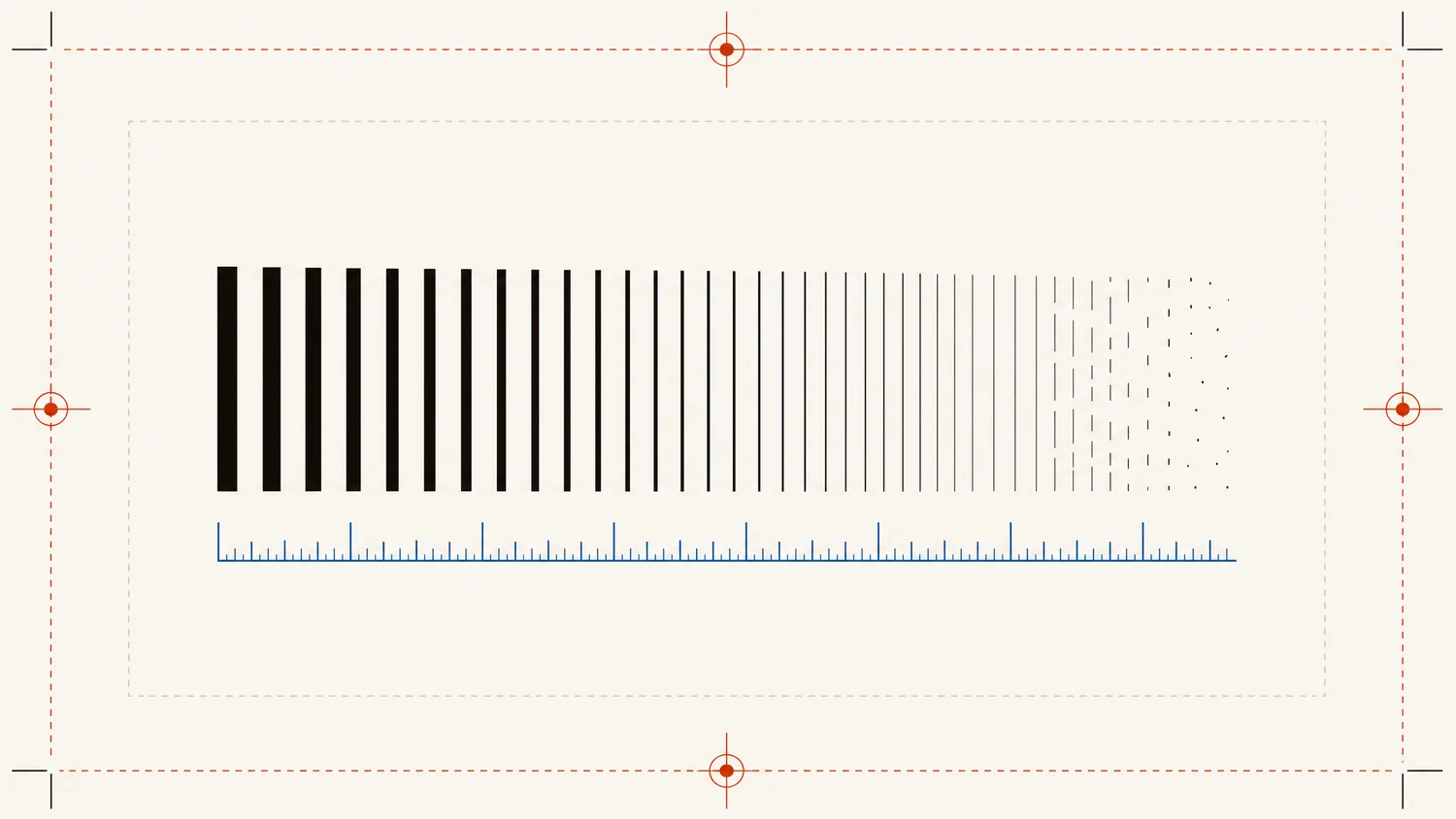
3:1 across. Nothing sits above or below the central band. These are our own files, made for this purpose. No customer’s artwork appears anywhere on this site.
01Why a rectangle lies
None of this is a design problem. It is geometry and process, and both are knowable before anything is printed.
A cylinder does three things to your artwork, and a preview box shows none of them.
a
The sides compress
At the edge of what a viewer can see, a strip of artwork occupies half the width it occupies head-on. Past that it keeps tightening until it reaches zero at the silhouette. The compression follows the cosine of the angle around the axis; it is not a stylistic squash that can be dialled down.
b
The handle removes a wedge
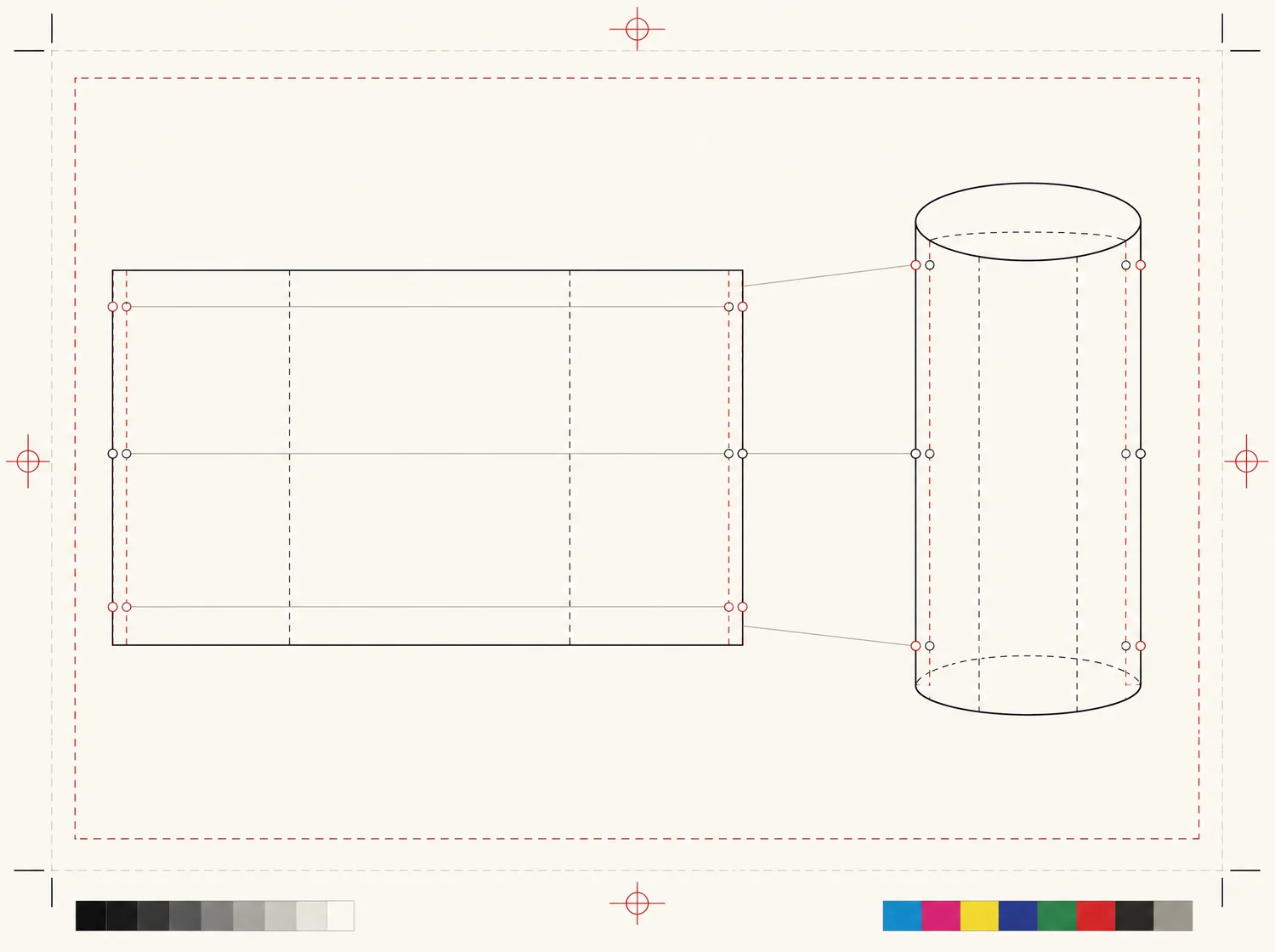
58 degrees of circumference are left unprinted where the handle is joined, which is why the printed band stops at 302 degrees rather than 360. Whether it reaches your artwork depends on how far your artwork spans, and the reading says which.
c
Nobody sees all of it
A mug on a shelf, in a photograph or in somebody's hand shows about 120 degrees. That is a third of the circumference. Everything else is round the back, and a flat preview quietly implies it is all on view at the same time.
And separately
The ink has a floor
This one is not about the shape. Sublimation on a ceramic coating holds a stroke down to about 0.4 mm; below that the ink diffuses faster than it can hold an edge. On an 85 mm tall print area there is often no room to scale up, which is the point at which the honest answer becomes no. Every carrier has its own floor, and the table below carries all five.
02How a reading works
01
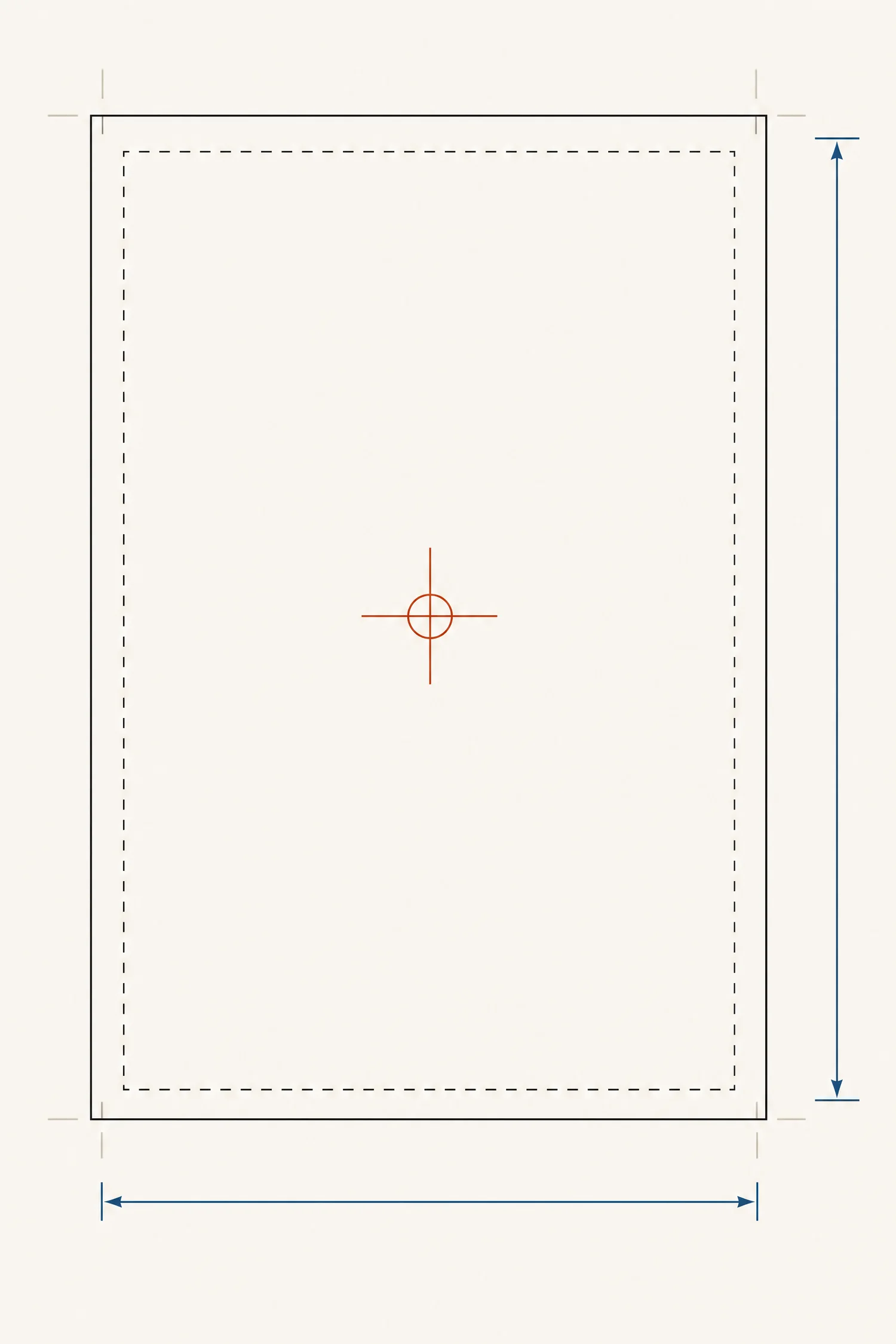
Send the file
02
Pick the shapes
03
Read what happens
03Carrier geometry
The table the reading is computed from.
Local data. No model produces these figures and no model performs the transform that uses them. They are typical for the commodity blanks and processes named, and the differences between suppliers are stated on every reading rather than hidden.
| Carrier | Print area | Ratio | Process | Holds down to | What defines it |
|---|---|---|---|---|---|
| TeeStandard adult crew, front panel | 305 × 406 mm | 1:1.33 | Direct-to-garment on light cotton | 0.50 mm | Flat, forgiving, and the one place a rectangular preview is honest. |
| Dark hoodieAdult pullover hood, dark fleece, front panel | 305 × 356 mm | 1:1.17 | Direct-to-garment with white underbase | 0.80 mm | Everything you draw arrives thicker. Gaps close before lines do. |
| Mug11 oz ceramic, right-hand handle | 216 × 85 mmon 257.6 mm of girth | 2.54:1 | Dye sublimation on polymer coating | 0.40 mm | A cylinder. The sides compress, the handle removes a wedge, and a viewer only ever sees 120 degrees of it at once. |
| Tote15 x 16 in cotton canvas, one side | 254 × 305 mm | 1:1.20 | Direct-to-garment on coarse canvas | 0.70 mm | Upright 5:6 area on a coarse weave. Horizontal work has nowhere to go. |
| StickerDie-cut vinyl, custom contour | 100 × 100 mm | 1:1 | Digital print, contour cut | 0.30 mm | The blade does not land where the file says. Anything inside 3 mm of the cut is a gamble. |
04Drawings, not product shots
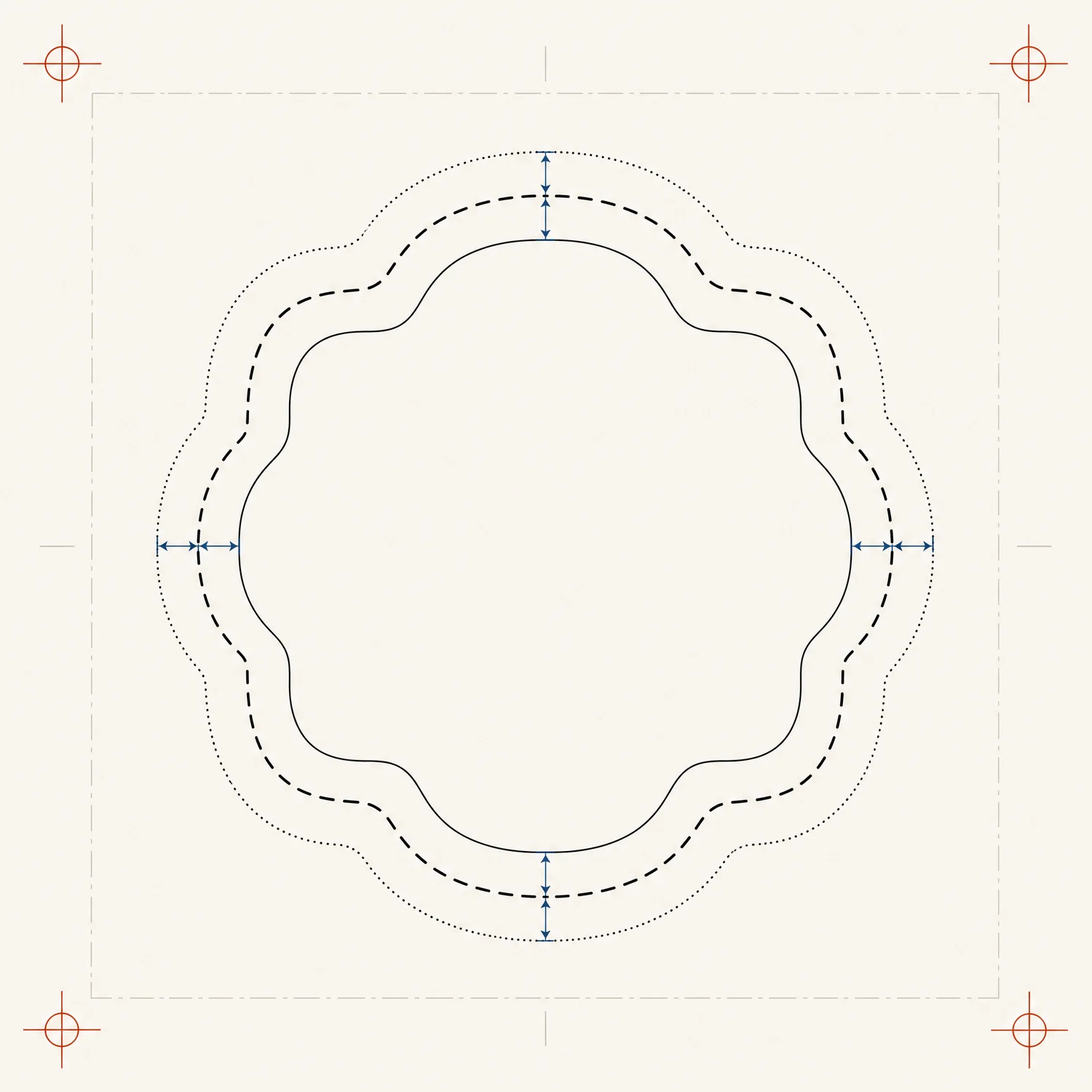
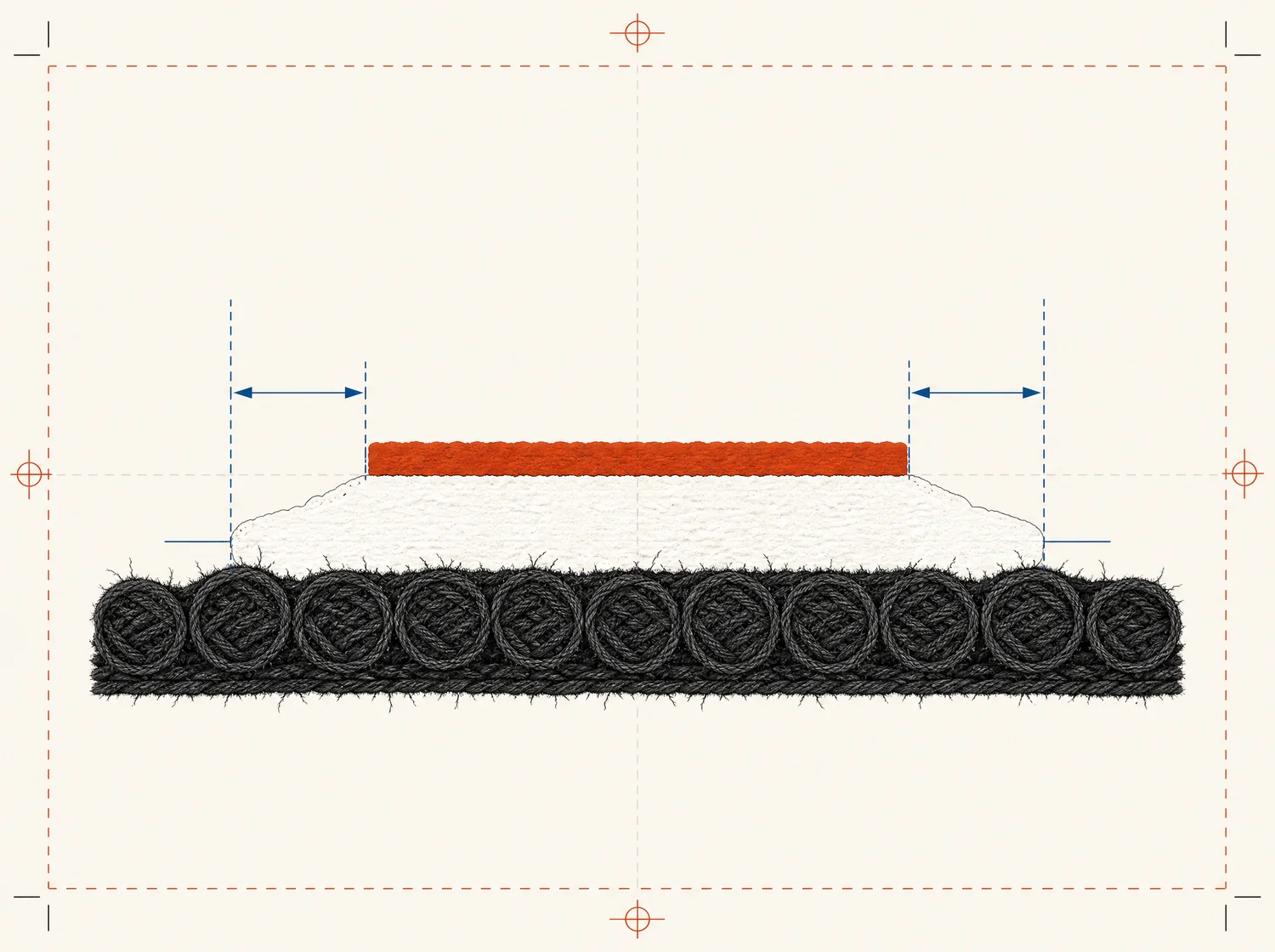
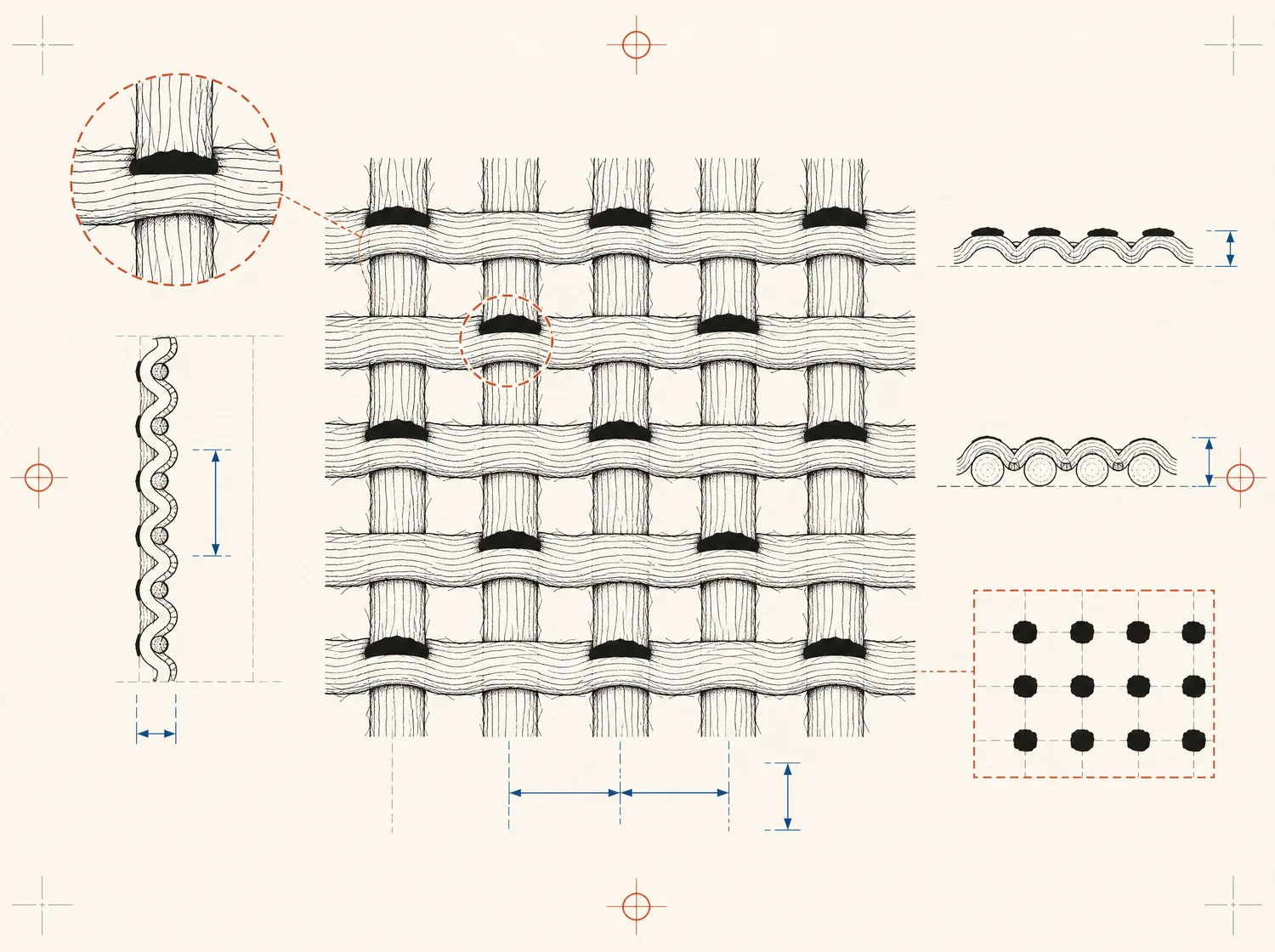
Everything here is a measurement drawing.
There are no styled product photographs on this site and no artwork is ever composited onto one. What a mug looks like is not the question; what your file becomes on its surface is.
05Boundaries
We only work out how your design fits the shape.
What it is, and whether you have the right to print it, is yours to know.
- No opinion on your design, its subject or its style. No artwork is created, redrawn or suggested.
- No copyright or trademark determination of any kind. Whether you may print an image needs professional legal advice, which this is not.
- Copyright in what you upload stays entirely with you. It is never used to train a model and never shown as an example.
06Pricing
The flat carriers are free. The cylinder is not.
On a tee, a tote or a sticker the rectangular preview you already have is broadly honest, so charging for a second honest rectangle would be charging for nothing. The cylinder is the part nobody can preview and nobody can do in their head. That is where the paid plans begin.
Prices in USD, excluding tax. Sales tax is added at checkout where applicable.
Free
$0USD / mo
no card needed
The flat carriers, where a rectangular preview is already honest.
50 credits/mo
Wrap
$10USD / mo
or $96/yr, $8/mo
The cylinder. Where the handle lands, what compresses, what is seen at once.
430 credits/mo
Shelf
$30USD / mo
or $288/yr, $24/mo
Every carrier at once, for people running a whole catalogue off one file.
1,650 credits/mo
07Questions
Including the two we get asked most.
- How is this different from the preview on the platform I already use?
The preview you get on a print-on-demand platform is a rectangle. Your artwork is placed into it flat, at the right proportions, and that is the whole of it. On a tee or a tote that rectangle is honest, because the surface really is flat.
A mug is not flat. Its surface is a cylinder 82 mm across, and a rectangular preview says nothing about what that does. Curveprint resamples your artwork onto the cylinder column by column, in your browser, using the orthographic projection a photograph of a mug approximates. The compression toward the sides is not drawn on afterwards; it falls out of the projection. It marks the wedge of circumference left unprinted for the handle, and it shows the 120 degrees a person actually takes in from one position instead of laying all 302 printed degrees out flat as though anyone ever sees them together.
Your artwork is never composited onto a photograph of a product. There is no photograph.
- Can you tell me whether I am allowed to print this design commercially?
No. Not in any form, and not as a hint.
Curveprint makes no copyright determination, no trademark determination and no assessment of any other right in anything you upload. Whether you may print a particular image is a legal question about the image, and answering it requires professional legal advice, which this service does not provide and does not imply.
Nothing here should be read as clearance. A reading that says a design fits a mug is a statement about geometry and nothing else. Our acceptable use policy requires you to confirm you hold the rights in what you upload before you upload it.
- Who owns the artwork I upload, and is it used to train anything?
You own it. Copyright in your artwork stays entirely with you. Curveprint claims no rights in it of any kind, and uploading it grants us nothing beyond permission to process that file so we can return your reading.
It is never used to train a model. Not ours, not anyone else's, and there is no setting buried anywhere that changes that.
It is never shown as an example. There is no gallery your work can end up in by default. If we ever wanted to show a particular file we would ask you about that file specifically, and a no would cost you nothing.
Uploaded files are encrypted at rest, are kept for 30 days so you can return to a reading, and are deleted after that. You can delete any file yourself at any time from the file list in your account, and deletion removes the file and its derived views.
- How accurate are the numbers?
The geometry is exact for the blank described. Print areas, circumference, the printed arc, the handle gap and the visible arc are measurements, and the projection is arithmetic performed on them. If the blank matches, the compression figures match.
The process thresholds are typical rather than exact. The finest stroke a process holds depends on the specific press, printhead, ink set and how recently it was serviced. The figures here are the values these processes hold in ordinary commercial conditions.
What we cannot see at all is stated on every reading rather than left implied: your printer's equipment and colour management, and the size differences between brands of the same product. Two blanks both sold as an 11 oz mug can differ by several millimetres of print area, and that moves every figure.
This is not a prediction about any particular printer, and it is not a proof.
- Will you tell me how to make my design better?
No. Curveprint has nothing to say about your design.
It does not evaluate the design, its subject or its style. It does not create artwork, does not redraw anything and offers no aesthetic opinion. When it suggests a change, the change is geometric: move this into the band that faces the viewer, clear this strip on the handle side, take these strokes above the threshold or reproduce the file larger.
We only work out how your design fits the shape. What it is, and whether you have the right to print it, is yours to know.
- What happens when a design simply should not go on something?
It says so, and it does not offer a workaround it does not believe in.
Some combinations are ruled out by geometry rather than by execution. A 3:1 horizontal composition on a cylinder that shows 120 degrees at a time is one of them: a viewer never sees more than about 40% of it, and there is no arrangement of that artwork on that shape that changes it. Fine hatching at 0.12 mm inside an 85 mm tall print area is another, because there is no room to scale up and simplifying the artwork would change what it is.
Every reading carries a section for this, and it is empty when there is nothing to put in it. A no is a useful answer and it is not an error.
- How do I cancel, and what happens to what I have paid for?
In your account, under Billing, in two clicks. There is no retention flow, no offer to reconsider and no other route. You never have to call anyone, email anyone, open a ticket or fill in a form to cancel, and you cancel through the same channel you subscribed through.
Your plan stays active until the end of the period you have already paid for, and you keep full access for all of it. We do not refund part of a period.
There is no statutory cooling-off period for this kind of purchase in the United States. Our refund policy is the policy published at /refunds, and we are bound by it.
- What are credits, and do they carry over?
Credits are a usage allowance inside the service. They are not money, not stored value, not redeemable for cash and not transferable.
Each plan grants an allowance each month. It does not carry into the next month. There are no credit packs, no top-ups and no way to buy extra: if you run out, the options are to wait for the next period or move up a plan.
A question about a reading costs 1. Reading an uploaded file costs 2. Fit views and the annotated correction view cost 5.
- Is there an age limit?
Yes. Curveprint is for adults running a business, and it is not offered to anyone under 13 under any circumstances. We do not knowingly collect personal information from a child under 13, and if we learn we have, we delete it.
Between 13 and the age of majority where you live, an account needs a parent or guardian who agrees to the terms and takes responsibility for the account.
- What does the free plan actually leave out?
The cylinder, the annotated correction view and export. Everything else, including the full reading and the measurements, is there.
The reason is specific rather than arbitrary. On a tee, a tote or a sticker, the rectangular preview your platform already gives you is broadly honest, so charging for a second honest rectangle would be charging for nothing. The cylinder is the part nobody can preview and nobody can do in their head: where the handle lands, how much the sides compress and what fits inside the 120 degrees anyone sees at once.
On the free plan the fit views carry a watermark. It is placed so that it never covers what will not work or what we cannot know.
Find out before you print it, not after.
Three designs a month on every flat carrier, free, with the full reading and the measurements. The cylinder is $10 USD a month.